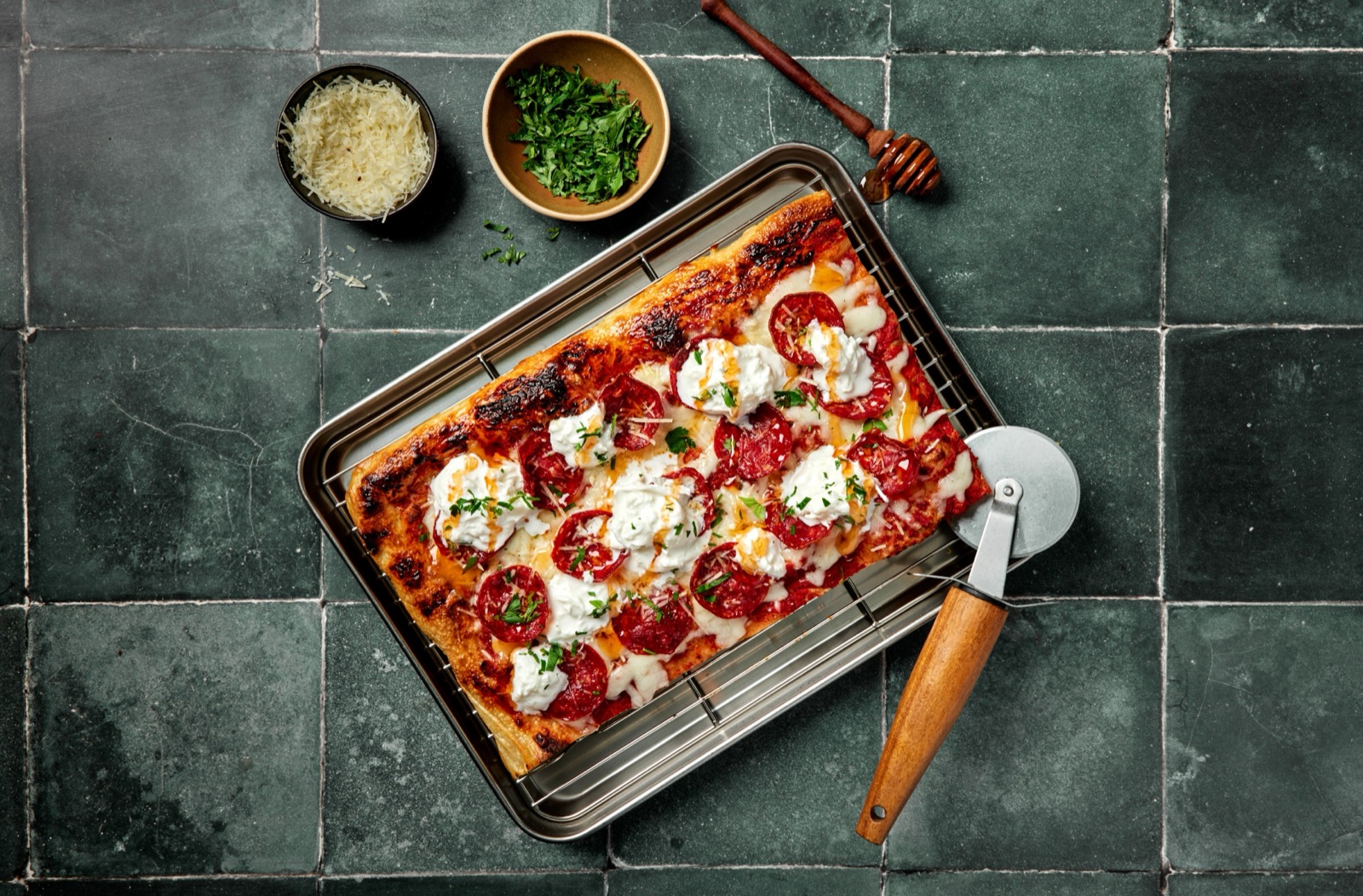
Most people walk in knowing they want pizza. Fewer people know which kind they want, or why the answer should matter to them. That changes today. At Bada Bing we serve both Roman and Classic styles, and they are not interchangeable. They come from different places, they are made differently, they eat differently, and they suit different moments. Here is the full breakdown.
The Dough: Where Everything Starts
Both styles at Bada Bing are built on the same 72-hour fermented sourdough base. That is not a detail, that is the foundation. Seventy-two hours gives the wild yeast and bacteria time to break down the flour properly. The result is a dough that is lighter on the stomach, more complex in flavour, and structurally stronger than anything made with commercial yeast on the same day.
What separates the two styles is hydration and handling. The Roman dough runs at a significantly higher hydration level. More water in the dough means a looser, stickier mixture that is pressed into a rectangular tray rather than stretched by hand into a round. It bakes low and slow in the tray. The Classic dough is tighter, more elastic, and gets hand-stretched to order before hitting a much hotter surface. Same starter. Very different results.
Roman Style: Pizza al Taglio
Pizza al taglio means pizza by the cut. This is the street food of Rome, sold from long rectangular trays in bakeries across the city since the 1950s. You point at what you want, it gets weighed or measured, cut with scissors, and handed to you. It is fast, unapologetic, and completely delicious.
The crust on our Roman pizza is the thing people remember. The interior is open and airy, full of irregular bubbles from the long ferment. The exterior base has a proper crunch. It is thick enough to have substance but light enough that you can eat two or three pieces without feeling like you made a mistake. The toppings go on after baking in many cases, which means fresh burrata lands cold and creamy on a hot, crispy base. That contrast is intentional. It is one of the best things about this style.
Roman pizza is a slow build. The trays prove and bake over hours. It is not something you improvise at the last minute. We make it fresh every day and what you get is the product of that process, start to finish.
Classic Style: Round, Hot, to Order
The Classic pizza at Bada Bing is round, hand-stretched, and cooked at high heat. Thinner base, faster bake, toppings on before it goes in. This is the format most people grew up with, and we are not reinventing it. We are doing it properly, which is a different thing.
Because the dough is still our 72-hour sourdough, the Classic does not taste like a standard pizza from anywhere else. The base has flavour of its own, not just a delivery vehicle for the toppings. There is a chew to it, a slight tang, and a blistered char around the edge that tells you the heat was right. It holds up under the weight of the toppings without going soggy in the centre.
The Classic suits people who want a full personal pizza, something to sit down with. It is complete, self-contained, and familiar in the best sense.
How They Eat Differently
Roman pizza is made for sharing and grazing. You order a couple of pieces, maybe mix and match across different toppings, eat standing or perched somewhere. The format encourages trying more than one thing. The Classic is a commitment. You choose one, it arrives as a whole, and it is yours.
Neither is better. They serve different purposes. If you are coming in with a group and want variety, Roman is the move. If you want your own thing, built the way you want it, the Classic delivers that.
The Toppings Tell the Story Too
Some toppings belong on one style more than the other. The Burrata Diavola is a Roman slice for a reason. The cold burrata on the hot base, the Calabrian chilli oil, the crisp undercarriage — that combination only works because the Roman dough can carry the weight and provide that textural contrast. On a thin Classic base, the same topping would overwhelm the structure.
On the Classic side, toppings that need to cook into the base, that need the heat of the oven to meld together, come into their own. The flavours integrate differently. Less layered contrast, more cohesion.
One Bakehouse, Two Styles, No Shortcuts
Every pizza that leaves our kitchen, whether it is Roman or Classic, started the same way three days earlier. Someone fed the starter, mixed the dough, and put it in cold fermentation. That process does not care about speed or volume. It runs on its own schedule.
When you pick up a slice of Roman al taglio or pull apart a Classic round at Bada Bing, you are eating something that took 72 hours to become what it is. That is worth knowing. Now you know. Come choose your style.